When we think about climate action, we often picture renewable energy, electric cars, or reducing plastic use. But one of the most powerful ways individuals can influence the climate is through what we eat.
This January, we’re focusing on the connection between food and climate, and exploring simple ways to make more sustainable eating habits feel achievable.
Research consistently shows that the choices individuals make have the greatest climate impact in three areas:
-
The food we eat
-
How our vehicles are powered
-
How our homes are heated and cooled
Of these, food is one of the most immediate ways we can make a difference—every single day.
The Climate Impact of Our Food
 Food production plays a surprisingly large role in global emissions.
Globally, food production is responsible for about 30% of all greenhouse gas emissions. It also uses 40% of the world’s land and roughly 70% of available freshwater.
To put that in perspective, food production produces more greenhouse gas emissions than the entire transportation sector worldwide.
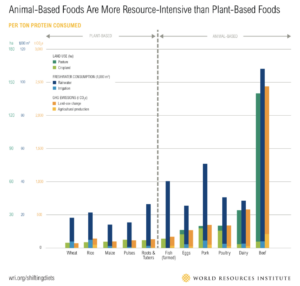
Not all foods have the same environmental impact. In general:
-
Animal-based foods produce the most emissions
-
Plant-based foods have a significantly lower footprint
Among animal products, beef has the largest climate impact due to the land, feed, and methane emissions associated with raising cattle. Other meats and dairy also have higher environmental costs compared with most plant-based foods.
This doesn’t mean everyone needs to become vegetarian overnight—but even small shifts toward plant-based foods can significantly reduce environmental impact.
Making the Transition to a More Sustainable Diet
For some people, a plant-based diet is already part of everyday life. For others, reducing meat or dairy consumption can feel like a big change.
The good news is that it doesn’t have to happen all at once. Small steps can make the transition easier—and still make a meaningful difference.
Start with One Day a Week
One of the easiest ways to begin is to choose one day each week to avoid meat.
Community initiatives like Plant-Based Tuesdays share weekly plant-based recipes and meal ideas to make it easier to try new dishes and build confidence cooking without meat.
Even one plant-based day per week can reduce your environmental footprint while helping you discover new foods.
Begin by Reducing High-Impact Meats
Another approach is to start by reducing the foods with the largest climate impact.
For many people, that means:
-
Reducing or eliminating beef
-
Gradually cutting back on lamb and pork
-
Reducing dairy products
This step-by-step approach can make the shift feel much more manageable.
Find Plant-Based Versions of Foods You Already Love
One of the easiest ways to stick with a dietary change is to adapt familiar meals rather than starting from scratch.
Today there are countless recipes for plant-based versions of classic dishes—from tacos and chili to pasta sauces and stir-fries.
These recipes are widely available:
-
Online recipe sites
-
Magazines and cookbooks
-
Community initiatives sharing weekly plant-based meals
Over time, these dishes can easily become part of your regular rotation.
Getting Enough Protein on a Plant-Based Diet
A common question about plant-based diets is whether they provide enough protein.
Earlier nutrition guidance suggested that each meal needed to include soy or animal products to provide “complete protein.” We now know that this isn’t necessary.
Plant-based proteins come from three main groups:
-
Grains
-
Nuts and seeds
-
Legumes (beans, peas, lentils, and soybeans)
Grains are slightly low in one essential amino acid called lysine, but legumes and nuts contain plenty of it. When you eat a variety of plant foods throughout the day, your body easily gets the full range of amino acids it needs.
Soybeans, in particular, remain one of the most versatile and protein-rich plant foods, appearing in foods such as tofu, tempeh, and edamame.
Small Changes, Big Impact
Shifting toward a more plant-based diet doesn’t require perfection. Even modest changes can make a difference.
By incorporating more plant-based meals, we can:
-
Reduce greenhouse gas emissions
-
Use less land and freshwater
-
Support more sustainable food systems
And often, we discover new flavors, healthier meals, and creative ways to cook along the way.
Climate solutions sometimes seem large and complicated, but food is one area where individual choices truly matter. Every meal is an opportunity to support both personal health and the health of the planet.
Learn More
If you’re interested in exploring the topic further, these resources provide research, recipes, and practical guidance on sustainable eating:
-
Plant-Based Tuesdays (Instagram recipe series)
-
Plate and the Planet – Harvard T.H. Chan School of Public Health
-
Healthy Eating Plate – Harvard Nutrition Source
-
Animal-Based Foods Are More Resource-Intensive than Plant-Based Foods – World Resources Institute
-
Tackling Food Waste at Home – Harvard Nutrition Source
-
The EAT-Lancet Commission on Healthy, Sustainable, and Just Food Systems
